
Adult Children of Alcoholics/Dysfunctional Families are those that grew up in the disease of alcoholism and/or addiction. This definition has expanded and increased in its scope as the field has gained more understanding.
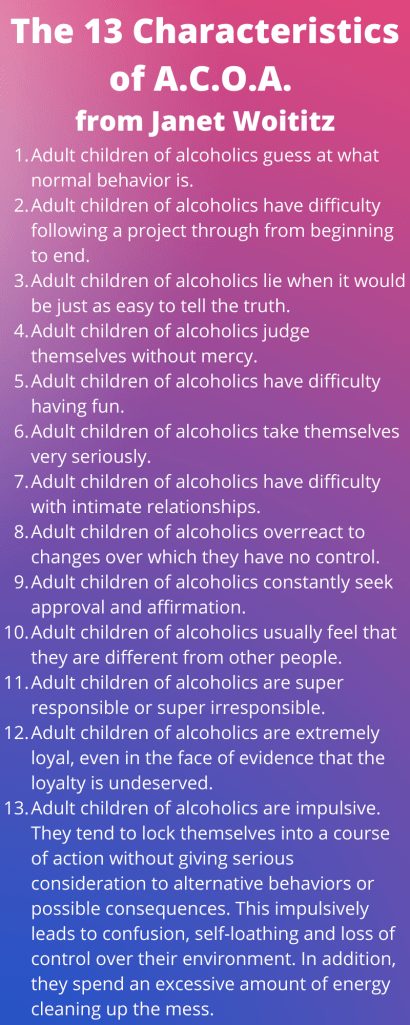
Janet Woititz’s book “Adult Children of Alcoholics” characterized ACOA as the following: “The same things hold true whether you’re five or fifty; low self-esteem, a sense of isolation, depression, feelings of being unloved, unlovable and inadequate the list is long…” in addition to 13 characteristics of those who grew up in a home with alcoholism.
The following description of family types that create ACOA is in the Yellow Steps Workbook from adultchildren.org:
“Since our founding in 1978, we have identified additional family types that create adult children who find ACA and identify with the program…represent primary family types that include: alcoholic/addict parent, hypochondriac parent, sexually abusive parent; militaristic or rigid parent; emotionally ill parent; and perfectionistic parent. There is overlap among these styles of parenting. There are more family types which can include adult children from divorced homes and foster homes. There is also the dysfunctionally religious home.” p.27
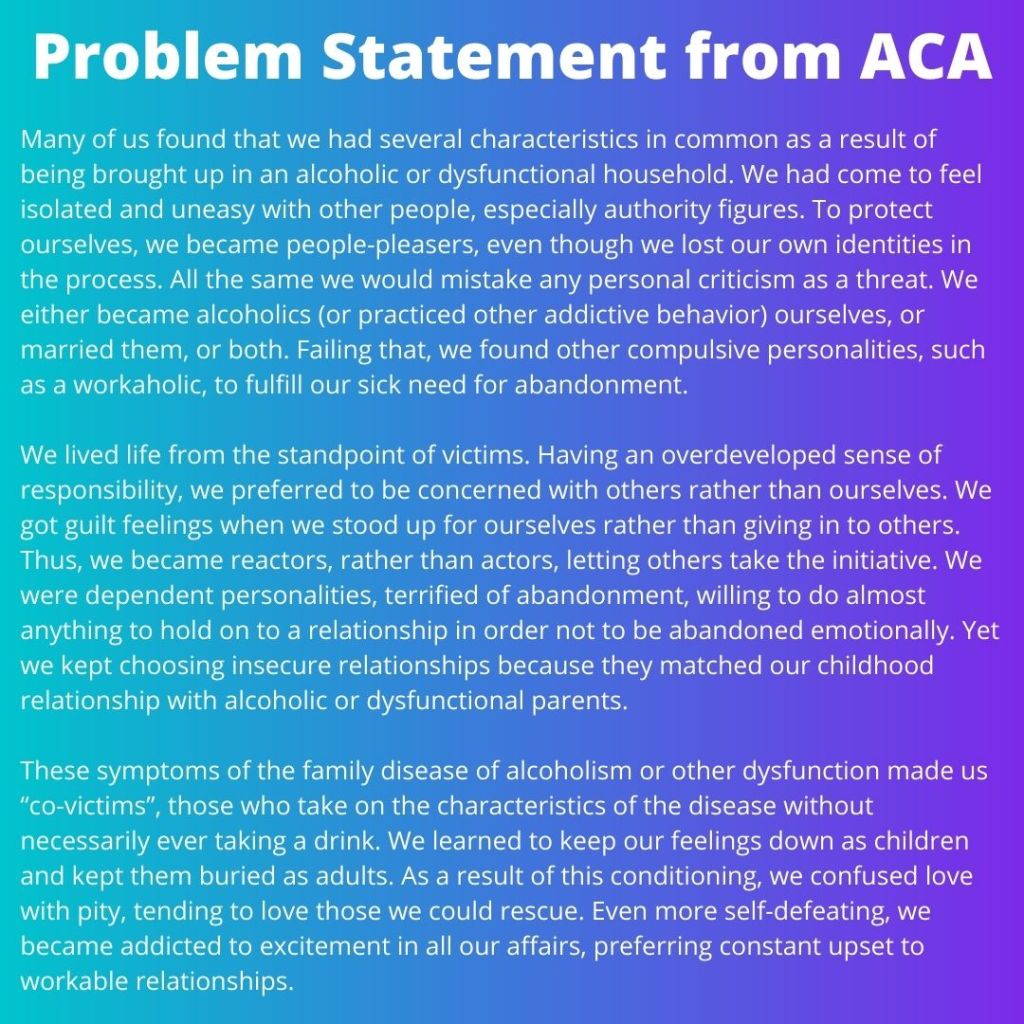
Adultchildren.org describes what an ACOA is in their problem statement:
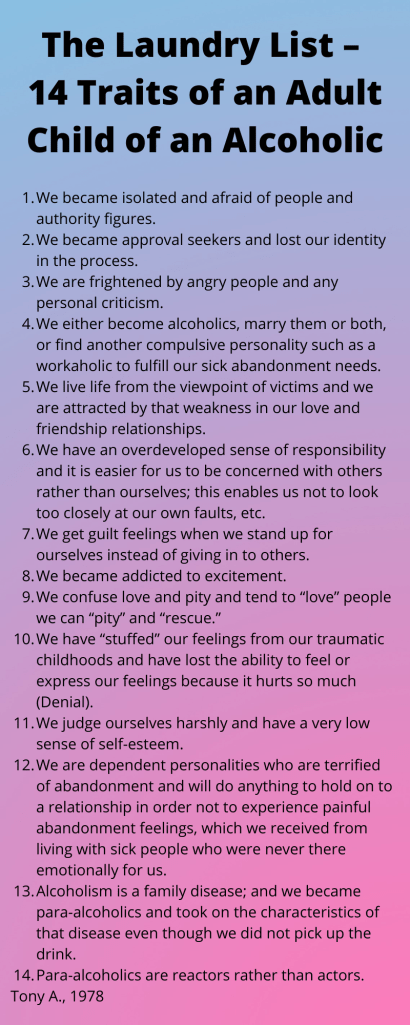
ACA then defines a list of 14 traits that Adult Children exhibit (https://adultchildren.org/literature/laundry-list/):
Tian Dayton released a book in 2012 that went a step further and stated the experience of growing up in a home results in the ACoA Trauma Syndrome, a specific type of Post-Traumatic Stress Disorder. ACOA can carry silent wounds that reemerge and manifest in adulthood that recreate relationship dynamics that mirror early experiences.
From her website – “Bestselling author, psychologist, and psychodramatist Tian Dayton examines this trauma through an exploration of the way the brain and body process frightening or painful emotions and experiences in childhood, and she shows how these traumas can become catalysts for unhealthy, self-medicating behaviors including drug and alcohol abuse, food issues, and sex, gambling, and shopping addictions.” https://www.tiandayton.com/book/the-acoa-trauma-syndrome/
There is a lot to learn on this subject and work to be done therapeutically and/or through 12 step programs. Bottom line is ACOA often underlies the present symptoms and issues. It takes courage to tackle ACOA traits but well worth the endeavor. There are many that have gone before and are wonderful inspirations of hope.
 Authentic Path Psychotherapy
Leave a comment